
Primitive Civil War Era Tool DISSTON & MORSS Philada Mandoline Pre Saw Saws 1845
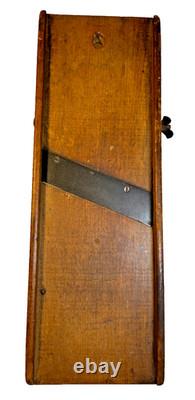
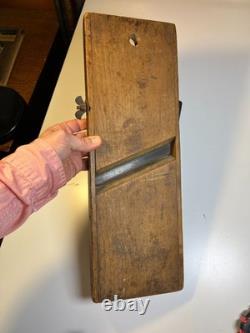
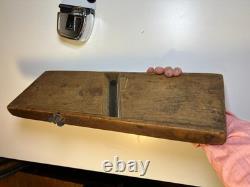

Antique American Mandoline / Vegetable Slicer. There are objects that merely survive history-and then there are objects that. Worked while history was being written. This substantial, hand-crafted American vegetable slicer was made by Disston & Morse of Philadelphia, an early partnership in the lineage of Henry Disston, whose name would soon become synonymous with the finest saws and edge tools ever produced in America.
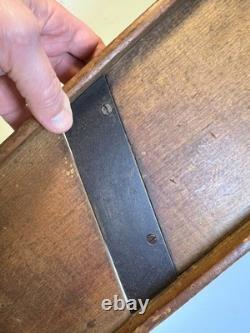
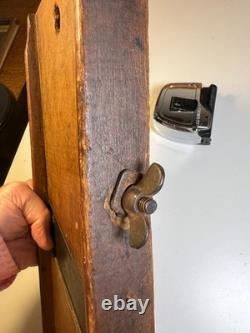
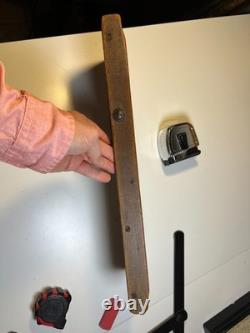
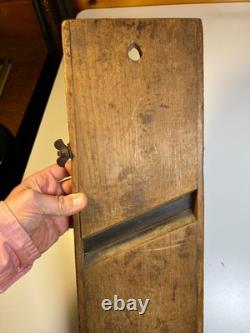
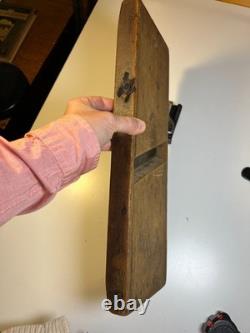
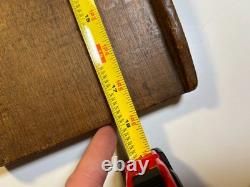
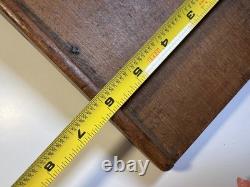
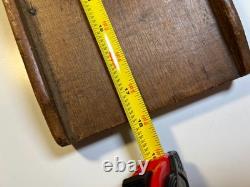
What makes this piece especially compelling-and genuinely rare-is that it is not a saw, but a Civil War-era kitchen implement produced during Disston's formative, experimental years, before the company narrowed its focus and became an industrial giant. Early Disston household kitchen tools are far scarcer than the firm's later saws. Most were used relentlessly, worn out, and discarded, making surviving examples-particularly those retaining legible period markings-uncommon and highly desirable. Measuring approximately 17 7/8 inches long by 6 1/8 inches wide, this is a classic early mandoline-style slicer: a solid wood board fitted with a razor-sharp iron blade, with no guard, no feet, and no concessions to safety.
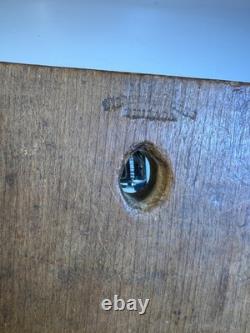
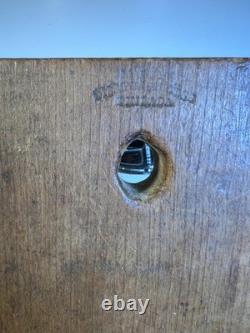
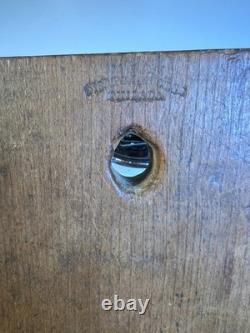
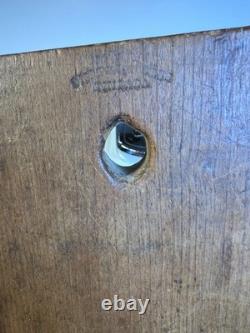
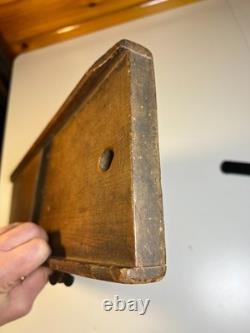
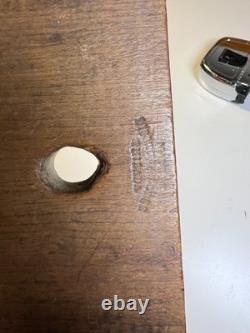
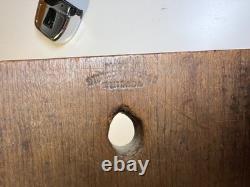
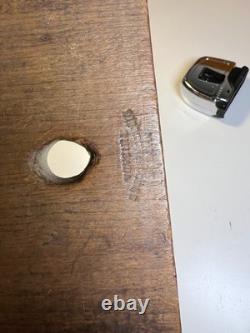
This was a tool made for practiced hands, when confidence in the kitchen was assumed and efficiency mattered more than comfort. The hanging hole at the top is clearly hand-cut, not machine-drilled, and remains slightly irregular-an unmistakable sign of early manufacture. The blade bed shows familiar darkening from moisture and acidic vegetables, while the iron blade remains firmly mounted and unapologetically functional. Maker's Mark & Attribution. Due to well over a century of genuine use, the embossed maker's mark on this slicer is not fully legible today.
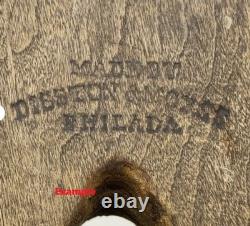
The wood in this area has been repeatedly handled, washed, and hung, softening portions of the original stamp. What is clearly visible is the lower location line "PHILADA, " a mid-19th-century commercial abbreviation for Philadelphia. To resolve the remaining lettering, this slicer was carefully compared with documented museum examples of the same mandoline pattern. Those examples retain a complete three-line stamp reading "MADE BY" on the upper line, followed by "DISSTON & MORSE, " with "PHILADA" beneath.The surviving letter forms on this example-particularly the ending ". STON & MORSE" -match those museum-documented stamps in layout, scale, and placement. The final photo labeled "marked example" shows one such museum example of the same mandoline, included for comparison only.
This attribution reflects comparative analysis using standard museum and tool-collector methodology, not guesswork. A Rare Disston Tool That Lived Through the Civil War. When this slicer was new, America was still lit by oil lamps and heated by hearths and early stoves. The Civil War erupted, reshaping the nation and its industries. Philadelphia stood as a major manufacturing powerhouse, supplying arms, tools, and household goods.
Disston's workshops were refining blade-making techniques that would soon make their saws world-famous. Refrigeration did not exist- food preparation and preservation were daily necessities. Vegetables were sliced by hand, bread was baked at home, and nothing in the kitchen was disposable.
This slicer may well have hung beside a hearth or early stove while letters arrived from the front and shortages were felt in Northern kitchens. It did not sit idle or decorative-it. Quietly and relentlessly, while history unfolded around it. Medicine, Technology, and Daily Life.
During the era in which this slicer was used. Medicine relied heavily on herbal remedies and patent medicines. Surgical practice existed before germ theory was widely accepted. Manufacturing had not yet standardized, giving early Disston tools a distinct individuality rarely seen later. The use of "PHILADA" is especially significant. This abbreviation was common in the mid-19th century but largely disappeared by the late 1800s, making it a meaningful indicator of age and origin. Where This Fits in the Disston Timeline (For Collectors). This slicer belongs to the earliest chapter of the Disston story. Henry Disston & Sons became America's dominant sawmaker. 1840 - Henry Disston arrives in Philadelphia.1840s-1860s - Disston partnerships (including Disston & Morse) produce a broad range of edged tools and household implements. Post-Civil War - Branding tightens and production increasingly focuses on saws.
Most surviving Disston tools are saws from the later, highly standardized period. Kitchen tools from the Disston & Morse era are far rarer, offering a glimpse into the company's experimental phase-when metallurgy, blade geometry, and manufacturing discipline were still being refined. For Disston saw collectors, this piece represents Disston before dominance -a missing chapter that complements early saws, medallions, and transition-era examples. Solid wood board with deep, original patina. Corners worn smooth from generations of use.
Iron blade intact and firmly mounted. Clear PHILADA stamp; maker's mark softened but readable. No modern repairs, refinishing, or alterations. This is not decorative nostalgia. It is a true Civil War-era survivor -a rare Disston-made household tool that bridges American domestic life and industrial history. Few objects connect us so directly to everyday life in mid-19th-century America. This slicer doesn't just date to the past-it remembers it.